
Acorn Technologies, Inc., a semiconductor technology innovator focused on advanced process and device IP, today announced the results of its research collaboration with Jean-Pierre Raskin, PhD, full professor at the Université catholique de Louvain (UCLouvain), showing that Acorn Buried Stressor (ABS) technology can provide benefits for RF-SOI and FDSOI platforms: improved RF substrate performance through a next-generation silicon-germanium trap-rich layer (TRL) approach, with the additional benefit in FDSOI of faster transistor performance through silicon strain.
This press release features multimedia. View the full release here: https://www.businesswire.com/news/home/20261119466750/en/
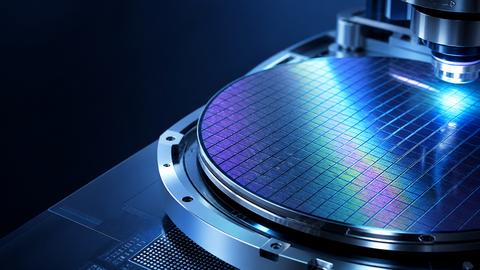
Acorn Technologies and UCLouvain Professor Jean-Pierre Raskin characterize Acorn Buried Stressor as a materials innovation that improves RF-SOI and FDSOI substrate performance through trap engineering and additionally supports FDSOI scaling through strain engineering.
As foundries and system designers look beyond geometric scaling to improve performance, power efficiency and RF integration, FDSOI and RF-SOI platforms remain strategically important for low-power logic, wireless, mmWave, 5G Advanced and future 6G applications. ABS was originally developed as a proprietary buried stressor technology to make FDSOI logic devices faster and support FDSOI scaling. The UCLouvain collaboration revealed that Acorn’s buried silicon-germanium layer can also provide an RF benefit by functioning as a next-generation TRL, the RF-SOI substrate innovation Professor Raskin originally pioneered.
“These results show that ABS is far more than a logic-performance technology,” said Tom Horgan, CEO of Acorn. “ABS provides a potential path to extend FDSOI scaling by offering strain engineering in transistors while introducing a FDSOI-compatible trap-rich layer for improved RF-FDSOI circuit performance. ABS also offers the potential for a lower-cost, high-performance RF-SOI substrate that avoids the significant costs associated with a conventional polysilicon-based trap-rich layer. For foundries, wafer suppliers and SOI ecosystem partners, this creates a significant opportunity to advance RF and logic integration on SOI platforms.”
Traditional RF-SOI substrates rely on trap-rich layers to suppress parasitic surface conduction near the silicon/buried oxide interface. Without this suppression, RF signals can suffer from harmonic distortion, coupling loss and degraded passive-device performance. Acorn’s ABS technology introduces an ultra-thin buried silicon-germanium (SiGe) layer that can perform this trap-rich function in RF-SOI and FDSOI structures, while also introducing beneficial strain into the channel of FDSOI transistors.
“Acorn’s buried stressor technology is significant because it combines two important materials-engineering mechanisms in SOI structures,” said Professor Raskin of UCLouvain. “What is especially surprising and innovative is how effectively an ultra-thin silicon-germanium layer can function as a trap-rich layer, while also preserving the strain-engineering benefit for FDSOI. This combination has strong potential for future RF-FDSOI and RF-SOI technology development.”
Key characterization and modeling results include:
- Carrier mobility: Up to 50% estimated electron mobility improvement in FDSOI devices, with corresponding improvement in digital and RF figures of merit.
- Prior FDSOI device results: Measurements on advanced FDSOI devices with ABS showed improved transistor performance, including a 10% increase in saturation current and a 17% increase in transconductance.
- RF nFET performance: Simulated peak fT improved from 362 GHz to 442 GHz, while peak fmax improved from 385 GHz to 431 GHz.
- RF substrate performance: SiGe TRL behavior reduced harmonic distortion by suppressing parasitic surface conduction, with RF substrate metrics similar to commercial trap-rich RF-SOI substrates. An ultra-thin SiGe TRL also offers the potential for lower-cost implementation versus conventional thick polysilicon-based trap-rich layers.
- Manufacturing compatibility: Raman, TEM, PED and XRD analysis showed the integrated stress in the SiGe layer is largely preserved after high-temperature processing, including rapid thermal annealing at 1050°C.
Acorn is evaluating commercialization pathways for ABS with foundry, wafer and SOI ecosystem partners across RF-SOI and FDSOI platforms.
About Jean-Pierre Raskin
Jean-Pierre Raskin is a full professor at the Université catholique de Louvain (UCLouvain) and a world-renowned authority on RF-SOI and FDSOI technologies. His research has contributed to major advances in high-resistivity SOI substrates, trap-rich layer technology and RF substrate engineering for high-performance mobile and wireless applications. Professor Raskin is the author or co-author of more than 400 scientific articles and is an IEEE Fellow.
About Acorn Technologies Inc.
Acorn is a semiconductor technology company developing advanced process, device and IP innovations for next-generation AI, computing, wireless, and RF markets. The company’s Acorn Buried Stressor technology is a materials innovation designed to improve SOI device and substrate performance through two complementary mechanisms: strain engineering to enhance FDSOI transistor performance and trap engineering to improve RF-SOI and FDSOI RF properties. Together, these capabilities enable new approaches to FDSOI, RF-SOI and integrated RF and logic platforms. For more information, visit https://acorntech.com.
View source version on businesswire.com: https://www.businesswire.com/news/home/20261119466750/en/
Media gallery



